
Cylinders have been an integral part of human history since ancient times. From their humble beginnings in Mesopotamia to the incredible engineering marvels of today, cylinders have played a significant role in various fields, ranging from architecture and transportation to science and technology. Let’s take a closer look at the evolution, uses, and importance of cylinders throughout time.
The earliest evidence of cylindrical objects dates back to around 3000 BCE in ancient Mesopotamia, where they were predominantly made from clay. These rudimentary cylinders were used as seals for marking documents and were adorned with intricate designs that depicted various aspects of everyday life. The cylindrical shape proved to be not only functional but also aesthetically pleasing, thus setting the stage for the future development of this versatile form.
As civilizations advanced, so did the application of cylinders. The ancient Egyptians utilized cylindrical stones known as obelisks to erect impressive monuments that symbolized power and authority. These towering structures, with their perfectly cut cylindrical shapes, showcased the architectural prowess of the time. The Greeks also embraced the use of cylinders in their architecture, as exemplified by the Corinthian columns widely employed in their temples and public buildings.
Fast forward to the modern era, and cylinders continue to play an essential role in various industries. In engineering, cylinders are widely used in hydraulic systems. Hydraulic cylinders provide linear force and motion, and they find extensive application in construction machinery, cranes, and even in aircraft landing gear. These robust and reliable cylinders allow for smooth and controlled movement, making them indispensable in heavy-duty applications.

Exploring the Fascinating World of Cylinders: From Ancient Mesopotamia to Modern Engineering Marvels
Cylinders are also instrumental in the energy sector. Gas cylinders, such as those used for propane and oxygen storage, enable safe transportation and distribution of gases to power various appliances and equipment. They are an essential component in cooking, heating, and industrial processes. Additionally, cylindrical fuel tanks are commonly found in vehicles, providing a secure and efficient storage solution for gasoline, diesel, or alternative fuels like compressed natural gas (CNG) or hydrogen.
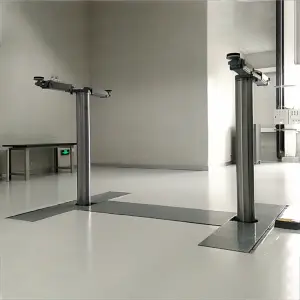
Exploring the Fascinating World of Cylinders: From Ancient Mesopotamia to Modern Engineering Marvels
One cannot underestimate the significance of cylinders in scientific fields. In chemistry and physics laboratories, glass cylinders are frequently employed to measure liquids accurately. Graduated cylinders, with their uniform diameter and precise volume markings, enable scientists and researchers to conduct experiments and obtain reliable measurements. Furthermore, cylindrical test tubes and flasks have become synonymous with laboratory equipment.
The medical industry heavily relies on cylinders as well. Oxygen cylinders are life-saving devices in hospitals and emergency medical settings, providing crucial respiratory support for patients with breathing difficulties. The cylindrical shape of these tanks ensures stability and ease of transportation, allowing medical professionals to quickly administer essential care.
Beyond their practical uses, cylinders have also captured the imagination of artists and designers. The art of cylinder engraving has been prevalent throughout history, with artists etching intricate patterns onto metallic surfaces. Additionally, contemporary artists often incorporate cylindrical shapes into their sculptures and installations to explore concepts of symmetry, movement, and space.

Exploring the Fascinating World of Cylinders: From Ancient Mesopotamia to Modern Engineering Marvels
In conclusion, the cylinder’s journey throughout history has been nothing short of remarkable. From its humble beginnings in ancient Mesopotamia to its current applications in various industries, the cylinder has proven to be a versatile and indispensable form. Whether in architecture, engineering, sciences, or the arts, cylinders continue to shape our world and push the boundaries of human ingenuity. So next time you encounter a cylinder, take a moment to appreciate its rich heritage and vital contributions to our society.quick car jack lift
About The Author
